K-12 foodservice leaders know understaffed cafeteria teams work hard to serve hundreds of students. But…
Resources | Blog | Uncategorized | Expert Q&A: How Modern Food Well Systems Help Short-Staffed K-12 Teams Speed Up Service
Expert Q&A: How Modern Food Well Systems Help Short-Staffed K-12 Teams Speed Up Service

School cafeterias face a near-impossible situation: hundreds of students, daily menu changes, a 30-minute lunch window and a short-staffed team.In the following Q&A, John Davis, LTI’s VP of Product Development, offers insights into how:
- Modern food well systems with R-454C refrigerant can increase efficiencies in K-12 cafeterias.
- Convertible independent food wells support faster transitions between meal periods.
- QuickSwitch Glass offers an attention-grabbing way to present menu items to students looking for easy-to-grab options.
- Adjustable food shields can transform full-service lines into self-service lines to free up staff for other critical functions.
What is an R-454C food well system?
John Davis: An R-454C food well system is a commercial refrigeration unit that uses R-454C, an A2L classified refrigerant with a lower global warming potential (GWP), to maintain precise temperatures across multiple food wells.
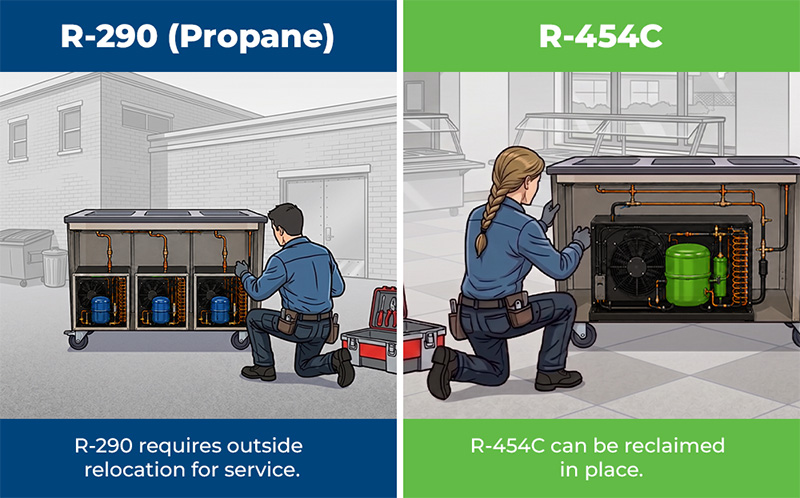
Unlike systems that require a dedicated compressor per well, R-454C food well systems support more wells with fewer compressors. In addition, these units can be serviced in place rather than removed to an outside, ventilated area, as required by R-290-based systems.
How do R-454C food wells impact the kitchen operation?
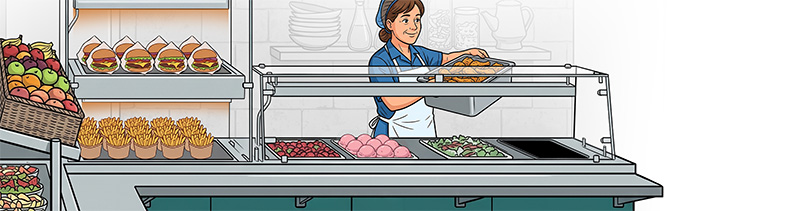
Davis: Compressors generate a lot of heat that needs to be removed from the cabinet body. Higher heat reduces energy efficiency and temperature performance. At the same time, compressor noise can make the kitchen louder. By running more cold wells off fewer compressors, R-454C systems generate less heat and noise inside the cabinet, which creates a quieter student meal experience.
How do R-454C food wells reduce equipment downtime and maintenance disruption?
Davis: Fewer compressor systems mean fewer components — and fewer components mean fewer points of failure.
When a service call is needed, R-454C’s A2L classification adds another practical advantage: the refrigerant can be reclaimed on-site, so technicians don’t need to move the unit outside for service. That’s less downtime.
What is a convertible food well and how does it help speed up meal transitions?
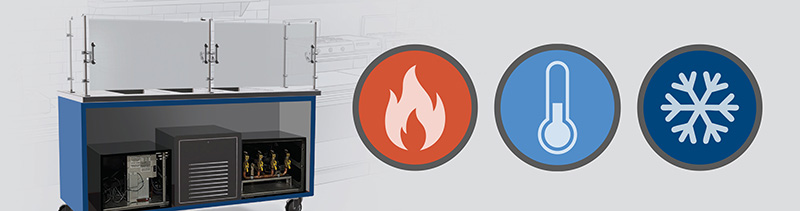
Davis: A convertible food well, like LTI’s QuickSwitch technology, lets staff switch each well independently within an hour or less between cold, frozen and hot temperature zones — all from a single counter.
This flexibility with temperature zones is perfect for meal period transitions.
As an example: instead of reconfiguring separate equipment or navigating across the cafeteria to serve different menu categories, one station can simultaneously hold a hot entrée like spaghetti and meatballs, a cold side like Italian chopped salad and a frozen dessert like gelato.
How do QuickSwitch Glass Hot and Cold Food Displays help K-12 cafeterias?
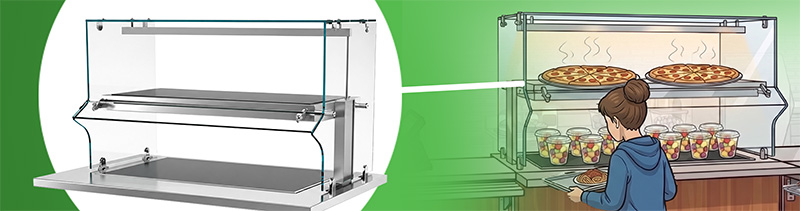
Davis: The QuickSwitch Glass Hot and Cold Food Display converts from a heated shelf to a frost top in an hour or less, allowing cafeterias to shift between serving hot items like hot sliced pizza or chilled fruit cups.
But here’s what makes it stand out: the QuickSwitch Glass positions food at eye level where students can see options clearly, make quick decisions and, best of all, serve themselves. This self-service format reduces moment-to-moment demands on staff while keeping the line moving faster.
How do food shields help K-12 foodservice staff serve more students?
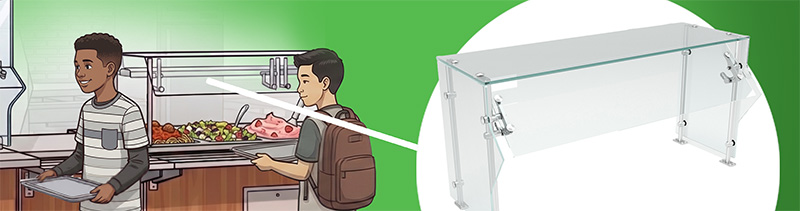
Davis: When food is clearly visible behind a protective shield, students can scan their options, make a decision and reach for what they want, without waiting for a staff member to help them. That independence moves the line faster and frees staff from standing post at every well during peak service.
For a short-staffed team, that matters. Instead of splitting attention across multiple stations to monitor and serve, staff can focus on restocking, managing the line and keeping the overall operation running smoothly.
How does a modern food well system increase student meal participation?
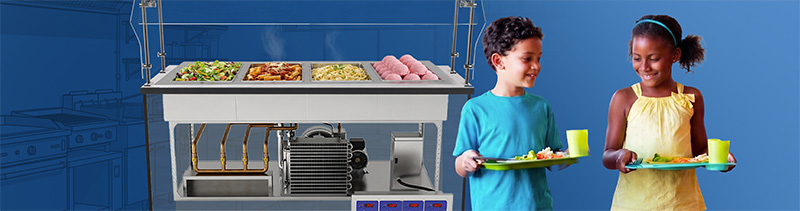
Davis: Ask any K-12 foodservice leader and they’ll tell you the same thing: meal participation drops when the experience feels slow or when the food options aren’t worth the wait.
So how can schools increase meal participation?
When students walk into the cafeteria and immediately see a variety of appealing options at eye level and can move through the line quickly enough to have time left to actually eat and socialize, that’s how schools can get more kids to eat.
A modern food well system supports that outcome.
Want to learn more about how modern food well systems can support your K-12 staff and students?
Download our educational resource, A Guide To Modern Food Wells for K-12 Foodservice, and visit our information page on R-454C food well refrigerant.